
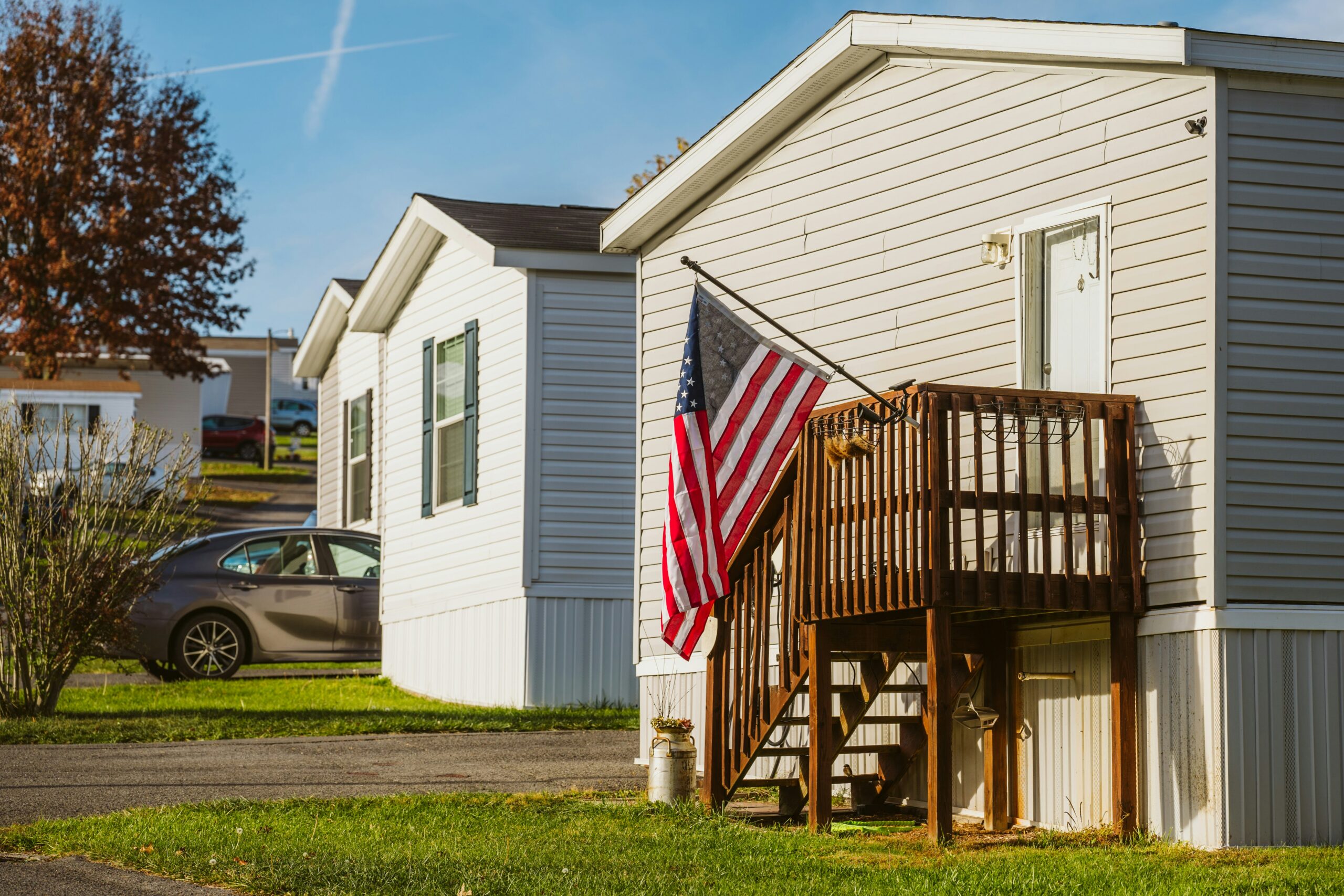
How Much Does It Cost to Move a Mobile Home? Price Guide
Moving a mobile home usually runs somewhere between $3,000 and $20,000, and the two things that move that number the most are the size of your home and how far it’s going. A single wide going a short distance lands near the bottom of that range, and a double wide crossing state lines with full setup services at the new site lands at the top, sometimes higher.
The part that catches people off guard isn’t the transport bill, though; it’s everything stacked around it. Permits, utility disconnects, escort vehicles, site preparation, tie downs, skirting, and rebuilding the porch you had to leave behind can easily add another $5,000 to $10,000 to your total cost, and almost nobody budgets for it the first time around.
I own mobile home parks, so I’ve written these checks, and I want to walk you through what they actually look like.
Don’t Miss Any Updates. Each week I’ll send you advice on how to reach financial independence with passive income from real estate.
Sign up for my newsletterHow I Ended Up Knowing This Stuff
I’m a periodontist by trade, so this isn’t exactly what I trained for. About ten years ago, I sprained my wrist on a ski trip, and sitting there with a wrapped up hand, it hit me that my entire income lived in that wrist, and if it ever quit working, so did my ability to provide for my family.
That sent me down a long road of learning how wealthy people build income that doesn’t depend on them trading time for money, and it eventually landed me in mobile home parks with my business partner, where we now own roughly 18 of them. So when I talk about what it costs to move a manufactured home, I’m not quoting a contractor blog; I’m talking about invoices we’ve paid to get homes onto vacant lots in our own parks.
That’s the lens here. You’ll get the real numbers, and you’ll also get the part almost no article mentions: what these costs tell you about mobile homes as an investment.
What Does It Actually Cost to Move a Mobile Home?
Here’s the range most mobile homeowners land in when they hire professional mobile home movers. These are real world averages that include transport and basic setup unless the row says otherwise, and they assume the home is in decent shape when the wheels start rolling.
| Type of Move | Distance | What Most People Pay | What’s Usually Included |
|---|---|---|---|
| Single wide mobile home | Local, under 50 miles | $3,000 to $8,000 | Transport plus basic setup |
| Single wide mobile home | Long distance, over 100 miles | $6,000 to $15,000 | Transport, setup, added permits |
| Double wide mobile home | Local move | $7,000 to $12,000 | Split, transport, reassembly |
| Double wide mobile home | Long distance move | $10,000 to $20,000 and up | Split, transport, escorts, full setup |
| Transport only move | Varies | $2,000 to $6,000 | Hauling only, you handle the rest |
A transport only move looks like the best deal on paper, and it is the cheapest line item, but it leaves you responsible for the disconnects, the site prep, the leveling, and the setup once the home shows up. Most people end up hiring full service movers anyway, and honestly that’s usually the smarter path unless you’ve done this before.
What Drives the Final Price?
The total cost isn’t random, and it isn’t only about distance. Four things stack on top of each other, and once you understand them, you can see your own number before anybody gives you a quote.
Home Size
Home size is the biggest driver by far. Single wide homes stay in one piece, they’re lighter and narrower, and they fit down roads that a wider home simply can’t handle.
Double wide homes have to be split into two sections, hauled on two separate trucks, and then put back together and releveled at the new location. That’s double the equipment and double the labor time, which is why the jump in price is so steep.
Distance of the Move
Local moves often come in at a flat rate or a lower rate per mile, because the crew can knock it out in a day and go home.
Long distance moves are a different animal. You’re paying per mile, plus fuel, plus additional permits, plus overnight costs when the trip takes multiple days, and crossing state lines adds another layer of paperwork on top of all of it.
Condition and Age of the Home
Older mobile homes cost more to move, and sometimes they can’t be moved at all. A home with a weak frame, soft floors, or water damage is a liability on the highway, and professional movers know it.
Plenty of transporters won’t touch a home built before a certain year unless it passes inspection, and some states have their own rules about age and current safety standards. If your home is in poor condition, get that answered before you start pricing anything else.
Permits and Local Regulations
Permit requirements swing wildly depending on where you live and where you’re going. Some counties hand you a moving permit for a couple hundred dollars, and some states want an engineering report or a structural inspection first.
Long distance moves that cross state lines can require a permit in each state, and each one has its own legal requirements, its own fee, and its own timeline. This step isn’t optional, so build it into your plan early.
Join the Passive Investors CircleWhat Are the Hidden Costs Most Owners Forget?
The quote from the moving company is the starting point, not the finish line. Here’s what gets added on, and these are the exact line items we’ve paid when bringing homes into our parks.
Permit fees. Local moves usually run $50 to $500. Long distance moves with multiple permits and inspections can run $1,000 or more once everything’s stamped.
Utility disconnection and reconnection. You’ll need licensed help to cut water, sewer, gas, and electric at the old spot and reconnect it all at the new one, and that’s typically $500 to $1,500.
Escort vehicles and police escorts. Oversized loads on public roads usually require escort vehicles, sometimes called pilot cars, and they run $200 to $1,000 or more. Routes with narrow roads, low bridges, or tight turns can trigger a police escort at $100 to $300 per hour.
Site preparation at the new site. The land has to be leveled, the piers or foundation have to be set, and drainage has to work. Depending on local building codes and the shape of the lot, figure $1,000 to $5,000.
Tie downs, anchoring, and skirting. Anchoring systems run $500 to $1,500, and skirting adds another $500 to $2,000 depending on material and home size.
Insurance coverage during transport. Your homeowners policy probably doesn’t cover the home while it’s rolling down the interstate. Movers carry liability insurance, but it may not cover full value, so extra coverage can run $200 to $1,000.
Exterior features. Porches, decks, carports, and add ons don’t travel. Tearing them off and rebuilding them at the new place can add $1,000 to $5,000, and sometimes people just abandon them.
Want the passive income playbook instead of the moving truck? If you’d rather own the dirt than haul the house, the Passive Investors Circle is where I break down how doctors and dentists build income producing assets outside their practice. It’s free to join.
What Does a Real Move Look Like in Dollars?
Numbers in ranges are fine, but here’s an actual scenario so you can see how fast it adds up.
Let’s say you’ve got a double wide sitting on private land about 60 miles from where it needs to go, and you want it set up and livable at the new site. The transport itself comes in around $9,500 because it has to be split and hauled twice.
Then the rest shows up. Permits run $400, escort vehicles add $600, utility disconnect and reconnect costs $1,100, site prep with new piers runs $2,800, tie downs and skirting come to $1,900, and rebuilding the porch you had to remove is another $1,500.
That’s about $17,800 all in, on a move most people would have guessed was a $9,000 job. And that’s a pretty clean move with no surprises, no bad weather, and no structural problems discovered halfway through.
How Do You Pick the Right Moving Company?
Regular moving companies don’t move manufactured homes. You want a mobile home transport company that does this work all the time, with the right trucks, the right insurance, and the right relationships with the permit office.
Questions to Ask Before You Hire
- Are you licensed and insured specifically for mobile home transport, and can I see the license number?
- Do you pull the permits, or is that on me?
- Does the quote cover transport only, or does it include prep, disconnects, setup, leveling, and tie downs?
- Have you moved a home this size this distance before, and can I talk to those customers?
- What happens if there’s damage in transit, and what are your coverage limits?
- What’s the realistic timeline from first day to move in?
Get at least three free quotes and compare what’s actually included, because the cheapest bid is usually cheap for a reason, and it’s normally the setup services or the insurance coverage that got trimmed out.
If a company dodges questions about licensing, insurance, or their process, that tells you everything you need to know. Careful planning on the front end is what keeps a $10,000 move from turning into a $20,000 one.
Don’t Miss Any Updates. Each week I’ll send you advice on how to reach financial independence with passive income from real estate.
Sign up for my newsletterShould You Move It Yourself?
Almost never, and I say that as somebody who likes saving money.
You’d need heavy duty towing vehicles, hydraulic jacks, axles rated for the load, and the skill to get a structure that size around turns without cracking the frame. One mistake buckles a wall or twists the chassis, and the repair bill runs past what the professional movers would have charged in the first place.
There’s also the permit problem. Most places won’t issue a moving permit to an individual without proof of insurance, bonding, and certified equipment, so the DIY path often dead ends before it starts.
The one exception is a short move of a small single wide on your own private property with the right equipment on hand. Past that, hire it out.
What This Tells You About Mobile Homes as an Investment
Here’s the part I really want you to think about, because it’s the reason this topic matters to investors and not just homeowners.
When it costs $10,000 or more to relocate a home, people don’t relocate. In our parks, the tenant owns the house, and we own the dirt underneath it, and the lot rent might be $350 a month.
Moving that home somewhere else would cost them two or three years of lot rent, plus a new site, plus the risk of damage along the way. So they stay, and the rent keeps coming in, and turnover stays low in a way you just don’t see with a typical rental.
That’s the whole thesis in one sentence. The same moving cost that frustrates a homeowner is exactly what makes the land underneath these homes such a steady asset, and it’s part of why we buy parks instead of houses. If you want to understand how regular investors get exposure to assets like this without operating anything, start with my breakdown of how real estate syndications work.
Bottom Line
Moving a mobile home costs most people somewhere between $3,000 and $20,000, and the spread comes down to size, distance, condition, and how many permits stand between you and the new location. Transport is roughly half the bill, and the other half hides in the permits, disconnects, escorts, site prep, and tie downs.
If you’re the one moving, budget for the full picture, get three quotes, and read what’s included in each one. The cheapest number on the page usually means somebody else is doing the setup work, and that somebody is you.
If you’re looking at this as an investor, the cost of moving these homes is the feature, not the bug. It’s what keeps tenants in place and keeps the lot rent steady, and it’s a big reason this ugly little asset class quietly outperforms the pretty ones.
Either way, the goal is the same one I’ve been chasing since that ski trip, which is building income that shows up whether or not your hands are working.
Join the Passive Investors Circle